A brain dump becomes useful when commitments, possible next actions, and unresolved questions are separated. Claude can help draft that structure, but it should not decide what matters most in your life or invent the time required to finish a task.
The workflow here uses Claude Haiku as an organizational aid. You supply the notes and constraints; the model proposes a list; you verify the facts and choose what to do. It is a proposed method with illustrative examples, not a report of a completed model test.
The important shift is to ask for clarification before scheduling. A neat calendar built from uncertain notes can conceal more problems than it solves.
What My Family List Got Wrong
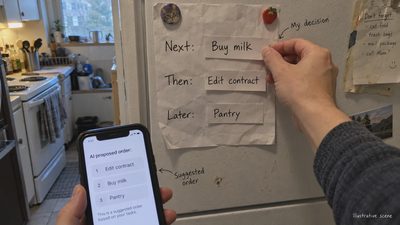
I often paste household errands, work reminders, and school notices into Haiku together. The table comes back clean, but the order is not automatically useful. In one list, I had to move buying milk ahead of editing a contract. That was my decision about what the household needed next, not evidence that groceries always outrank work.
The lesson is to separate extraction from prioritization. A deadline written in a notice is information Claude can preserve. The importance of an errand depends on context that may never appear in the notes. A tidy table cannot supply that missing context.
For the next attempt, add the reason behind the order: what must happen today, what can wait, and which fixed commitment limits the available time. Ask Claude to explain any proposed order using those details. If the explanation relies on something you never supplied, keep the item unscheduled until you decide.
Why a Brain Dump Is Not Yet a Plan
A typical note mixes several kinds of information: tasks, ideas, deadlines, reminders, worries, and requests involving other people. Those items should not all become equally urgent calendar entries.
Consider this illustrative note:
Course handout needs updating. Ask Jordan whether the illustrations are final. Send the client draft Friday at 3 p.m.; update the introduction first. School form due sometime soon. Buy groceries. Maybe reorganize the pantry. Call about the printer if the restart does not work.
Some details are definite. Others are conditional or missing. The pantry idea may not belong in this week’s action list at all. The printer call has a condition. The school form needs a deadline before it can be scheduled responsibly.
The first task is classification, not optimization. Keep the source note available so you can see whether anything changes during that process.
Pass One: Extract Without Deciding
Ask Claude to preserve the wording of important details and identify the type of each item.
Turn the notes below into a structured draft.
Use only information explicitly present in the notes.

For each item, identify:
- The action or idea
- Any stated deadline
- Any explicit dependency or condition
- Missing information needed before scheduling

Do not assign priorities, durations, owners, or dates.
Keep optional ideas separate from commitments.

Notes:
[Paste a non-sensitive brain dump.]
This stage should make the input easier to inspect. It should not create a final schedule or claim that your week can accommodate every item.
A useful draft might use the following columns:
Item | Stated constraint | Human question |
|---|---|---|
Send client draft | Friday, 3 p.m.; introduction first | Is the revised introduction ready? |
Return school form | Deadline missing | What date appears on the form? |
Call about printer | Only if restart fails | Has the restart been tried? |
Reorganize pantry | Optional idea | Does this belong on the current list? |
The table is an example of the desired structure, not an observed Haiku output. Its value is that unknown information stays visible.
Pass Two: Resolve the Questions Yourself
Before asking for a practical action list, answer the questions that affect order or feasibility. Look at the actual school form. Confirm whether the illustrations are final. Check the condition attached to the printer task.
Do not turn a model’s suggestion into a fact simply because it makes the table complete. If no deadline is available, keep the item in a questions list or contact the appropriate person yourself.
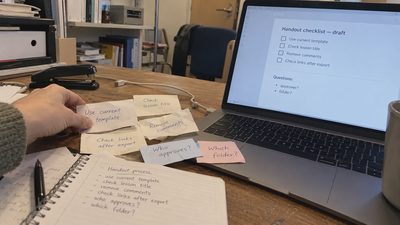
At work, I would distinguish “ask whether the illustrations are final” from “finish the handout.” The first can be a useful next action even when the larger task is blocked. That distinction prevents the list from treating an unresolved dependency as a failure of motivation.
You can then supply verified additions:
Update the draft using these confirmed details:
- [Verified deadline]
- [Confirmed dependency]
- [Task intentionally deferred]

Keep unresolved information visible.
Do not infer anything beyond these updates.
If the list contains work for someone else, verify ownership rather than assigning it through the prompt. An action list is not a substitute for an agreement.
Pass Three: Choose a Small Set of Next Actions
Now add constraints that reflect the actual day: available time, fixed appointments, energy, and tasks requiring a particular place or person.
You do not need Claude to create a minute-by-minute calendar. A short shortlist can be more useful:
Suggest up to three possible next actions from the verified list.

Constraints:
- I have [available time] before [fixed commitment].
- I can work from [location].
- I cannot contact [person/team] until [time].

Explain which stated constraint supports each suggestion.
Do not invent task durations.
Label the order as a suggestion for me to approve.
A duration you provide is still an estimate unless it has been measured. If you are uncertain, choose an action that can be stopped cleanly rather than asking the model to promise that a larger task fits.
For example, “open the handout and identify the sections needing updates” may be a better bounded action than “finish the handout before pickup.” The model cannot know the hidden complexity of the document unless you supply it.
What to Check Before Using the List
Review each item for five things:
Meaning: Did an idea become a commitment?
Time: Did the model add or change a deadline?
Sequence: Is every dependency supported by the notes?
Ownership: Does the action belong to the person named?
Scope: Is the next action small enough to understand and begin?
If the answer is hard to verify, ask for a source phrase beside each item. For short notes, that can make the check faster than reading a polished summary without references.
Also inspect omissions. A list can be accurate in every included item while leaving out the one deadline that matters. Compare the full source note, not just the parts that look suspicious.
When the Draft Is Too Ambitious
A common planning problem is asking for a realistic week without supplying the limits that make realism possible. Fixed meetings, school pickup, travel, and interruptions compete with discretionary work.
I would rather keep a short approved list than accept a complete-looking schedule built on assumptions. At home, a plan needs room for the ordinary unpredictability of two children; the same principle applies to workplace interruptions.
If the proposed list is too long, tell Claude which constraints were missed. Ask it to show a deferred section instead of silently deleting tasks. Deferred work remains visible without pretending it will happen today.
Do not measure success by how many boxes appear. Measure it by whether the approved next actions help you begin and whether the original commitments remain intact.
Save the Method, Not the Whole Conversation
After a useful attempt, retain the extraction prompt, the review checklist, and the final approved list. You may not need every draft or personal note in a permanent archive.
Use the same structure the next time, but do not assume an old prompt is reliable just because one input went well. A larger note, unclear date, or different language can change the result.
If a normal notes app or checklist already solves the problem, use it. Claude is useful only if the extra interaction creates a meaningful improvement in clarity or effort.
When I Would Use This—and When I Would Not
I would consider this workflow when a short note mixes commitments, optional ideas, and unresolved questions. It is particularly suitable for making the next action visible before transferring it into an existing task tool.
I would not use it to let AI assign work to colleagues, invent a family schedule, or decide which personal responsibility deserves attention. Those decisions require context and agreement beyond a list.
Try one brain dump with fewer than a dozen items. Extract first, resolve missing information second, and choose next actions last.

No letters yet — be the first to write.