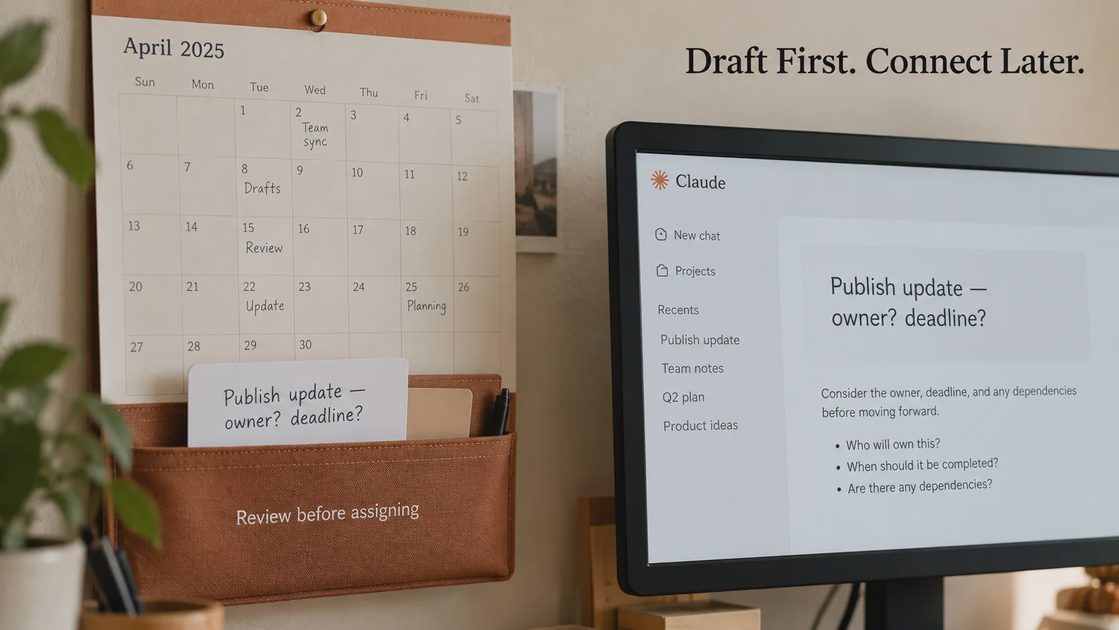
An automation idea can look useful because the demonstration skips its exceptions. Before relying on a Claude workflow, inspect what information it uses, what it may change, how a person reviews the result, and what happens when it cannot complete the task.
The practical aim is to start with drafts and reversible handoffs. Add actions only after the process, permissions, and failure handling are understood.
The Failures Behind My Caution
Several ordinary experiences changed how I approach automation. A household task table needed my priorities corrected. A quick meal suggestion introduced wine I did not want. An internal onboarding draft revived a retired refund policy, and a research check supplied an invented historical number.
These were drafting and planning experiences, not evidence that five connected automations were deployed and failed. The distinction matters: approving a draft and allowing software to act on it create different responsibilities.
The ideas below carry those lessons into possible team workflows. Before connecting a destination, ask what happens if the draft preserves old information, invents a missing condition, or sounds helpful while avoiding the real question. Make the first version produce something a person can inspect. Then decide whether automating the handoff would solve a recurring problem.
1. Turn Meeting Notes Into Assigned Tasks
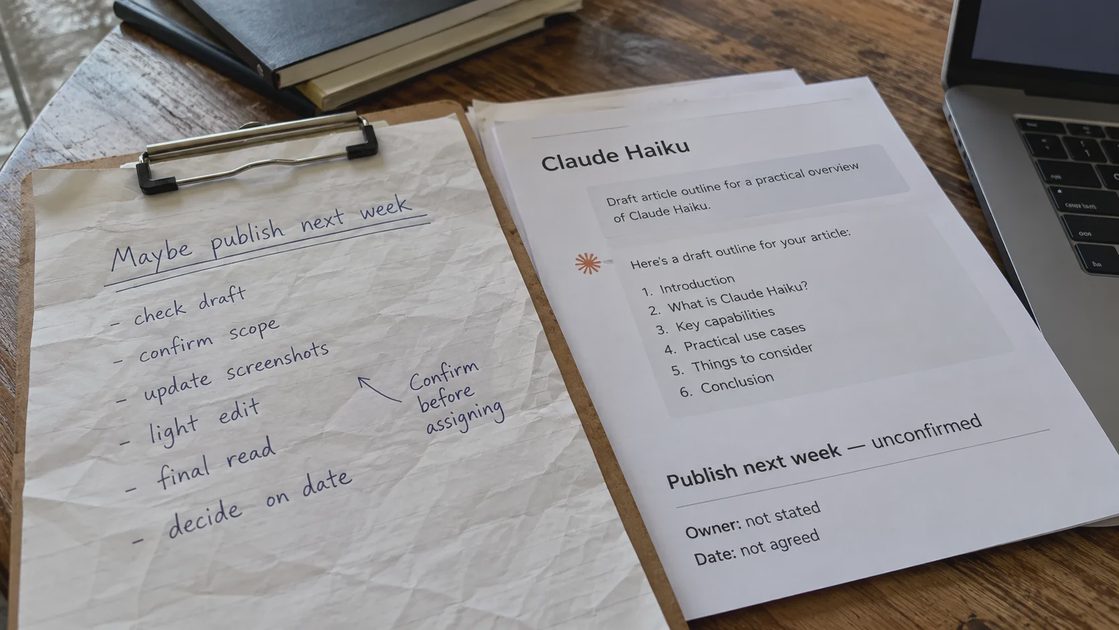
The attractive idea is straightforward: paste notes and receive a task list with owners and deadlines. The difficulty is that a meeting can contain suggestions, tentative dates, and statements that were never agreed.
A model may produce a complete-looking list from incomplete notes. That is a failure possibility to test, not an observed result claimed here.
Begin with extraction rather than assignment. Ask for stated actions, explicit owners, exact dates, and unresolved questions. Keep source phrases beside the extracted items.
A person should confirm agreement before transferring tasks into a team tool. If no owner was named, the output should flag the missing owner rather than choose one.
The boundary is especially important when a connected tool can notify people. Drafting a possible task and assigning it to a colleague are different actions.
2. Convert Customer Messages Into Replies
A draft reply can save writing effort when approved policy material is clear. It becomes harder when the request involves exceptions, disputed facts, or promises that require authorization.
The first pilot should generate drafts without sending. Supply the original request and current policy, then ask for source support and unresolved questions.
Review the reply for completeness, policy fidelity, privacy, and commitments. A friendly response that promises an unapproved refund is unsuitable regardless of its tone.
Use an established escalation path for cases the policy does not settle. Do not ask the model to invent a reasonable exception to keep the conversation moving.
For this idea, the most important test may be whether the workflow declines to answer when the available information is insufficient.
3. Build a Weekly Calendar From a Brain Dump
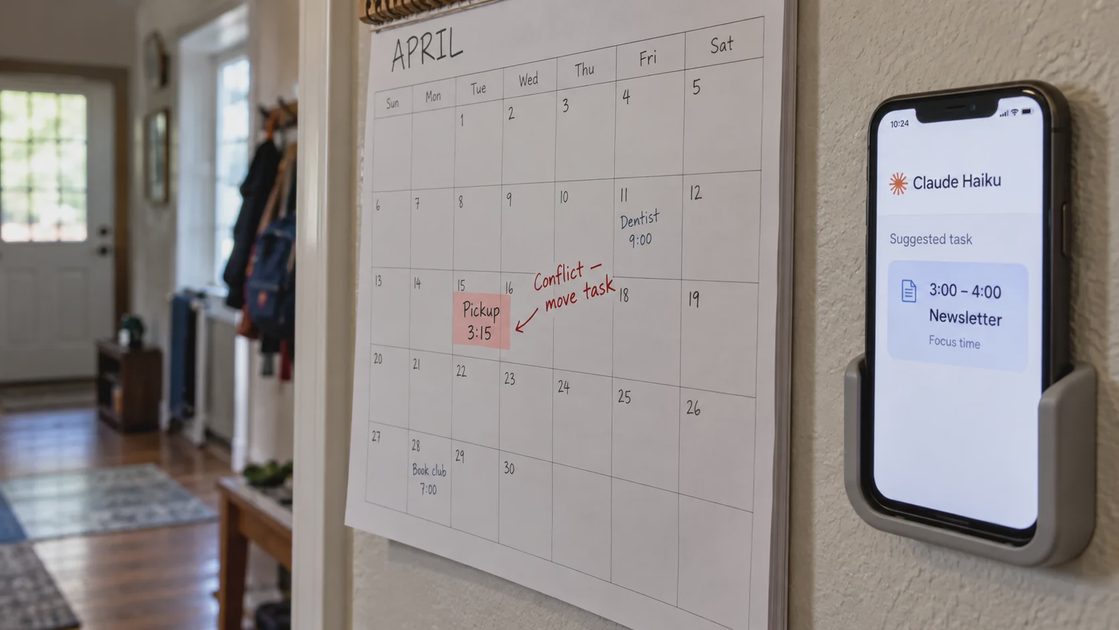
A calendar is appealing because it makes a messy list look organized. But scheduling needs fixed commitments, availability, task estimates, dependencies, and personal priorities.
Without those inputs, the model can only propose assumptions. Those assumptions should remain visible and unapproved.
Start with a categorized action list. Resolve missing deadlines and distinguish optional ideas from commitments. Then ask for a small suggested schedule using the constraints you provide.
Review it before manually entering events. If you later connect a calendar, define which calendar may change, whether invitations can be sent, and how conflicts or mistakes are handled.
At home, I would want the process to respect the schedule we already use. A second calendar that needs constant repair would add another source of friction.
4. Summarize Research Into Recommendations
A research automation can gather notes, summarize them, and propose what to do. The risk is that each transformation can weaken the connection between a claim and its source.
A source may contain a narrow finding. The summary may broaden it. The recommendation may then treat that broader claim as established evidence.
Separate extraction, synthesis, and judgment. Build a claim table with source passages before drafting the brief. Preserve disagreements and identify questions the sources do not answer.
The final recommendation needs a person’s explanation of how the evidence applies to the actual decision. Do not let the model’s smooth narrative stand in for that reasoning.
If current information is required, verify the sources and dates separately. A polished citation list is not proof that the material is current or supports the claim.
5. Turn Repeated Notes Into a Living Internal FAQ
A conversational FAQ can appear easier than maintaining a document. Yet it still needs approved sources, ownership, permissions, and updates.
If a process note is ambiguous or outdated, an answer generated from it may be misleading. Adding AI does not resolve the source problem.
Begin with a draft-only FAQ from a small, audited document set. Ask for source sections and explicit abstention when the documents do not answer the question.
Test questions outside the source scope and questions requesting exceptions. A useful FAQ should make a missing answer visible rather than invent policy.
A static approved page may be enough. Choose a conversational layer only if it addresses a navigation problem worth the ongoing maintenance.
The Shared Failure Questions
Across all five ideas, inspect the same relationships:
Boundary | Question |
|---|---|
Input | Is the information current, complete enough, and appropriate to share? |
Interpretation | Does the model preserve uncertainty and source meaning? |
Output | Is the draft easy to compare with the input? |
Action | What can change, and who authorizes the change? |
Failure | Can the process pause, escalate, or return to manual work? |
Maintenance | Who owns updates to instructions and sources? |
The table is a review framework. It does not establish that a particular workflow is safe or useful without actual evaluation.
A prompt can state boundaries, but it should not be the only control for sensitive information or consequential actions. Keep early experiments disconnected from those actions.
Test the Handoff, Not Just the Answer
Many workflows fail outside the generation step. A correct draft can be copied into the wrong tool, an approved date can be entered incorrectly, or a source update can leave an old prompt behind.
Include those stages in the pilot. The task ends when the reviewed result reaches its intended use under the correct permissions.
Record where a person must intervene and whether the intervention is straightforward. An automation that needs expert rescue for ordinary exceptions may be difficult for a small team to maintain.
Compare the whole process with a simpler alternative. A template, checklist, or standard form may achieve the same benefit with fewer moving parts.
Keep the First Experiment Small
Choose one idea and one limited input set. Define what a correct result looks like before running it. Include at least one case with missing information and one case outside scope.
Do not invent outcomes to fill a testing report. Keep actual inputs, outputs, corrections, and dates if you intend to publish results later.
I would prefer to learn that a process needs a better source document before connecting it to live work. That finding can be valuable even when the automation is deferred.
When I Would Use This—and When I Would Not
I would use these ideas as starting points for draft-only pilots with clear review and a manual fallback. They focus attention on the stages a polished demonstration can omit.
I would not describe them as tested successes or failures without records, or enable actions merely because the first answer looks useful.
No letters yet — be the first to write.